Coconut shell · Chapter one
Materials
The house begins with one of the densest plant materials on earth.
The material
For a shisha lounge or a working kitchen, the relevant specification depends on the application. Our published Carsurin report measures moisture, ash content, volatile matter, and fixed carbon for one submitted coconut shell charcoal briquette sample. It does not test burn time, flame, sparks, odour, cracking, ash colour, or heat stability, so we do not present those characteristics as results of that analysis.
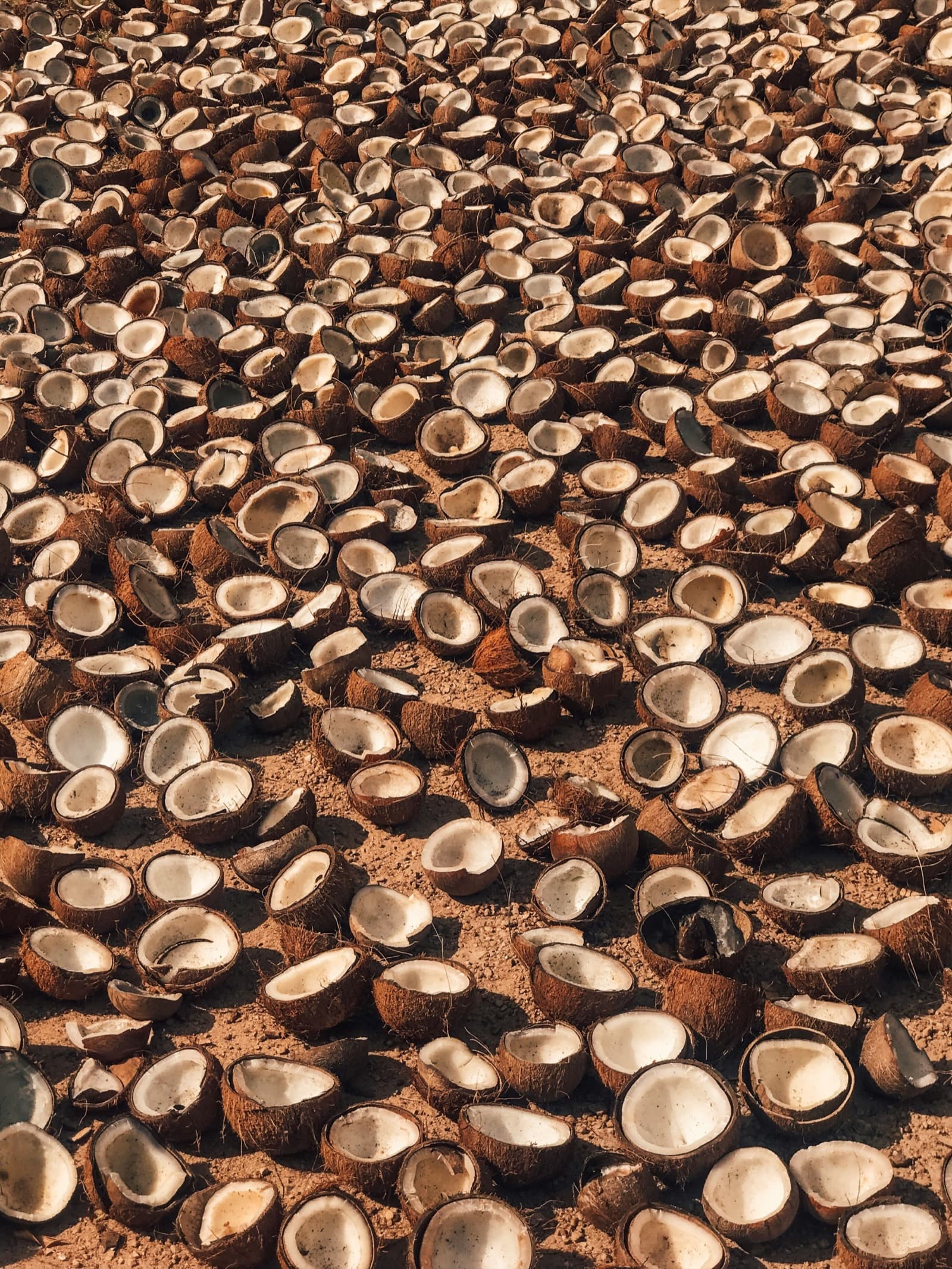
A mature coconut shell is one of the densest plant materials on earth. The endocarp — the hard inner shell that protects the seed — is built from lignin layered over fibre, and it carries far more fixed carbon by weight than any common hardwood. When heated slowly, in low oxygen, the volatile matter is driven off and what remains is a clean, dense block of carbon. That is where the briquette begins.
Where it comes from
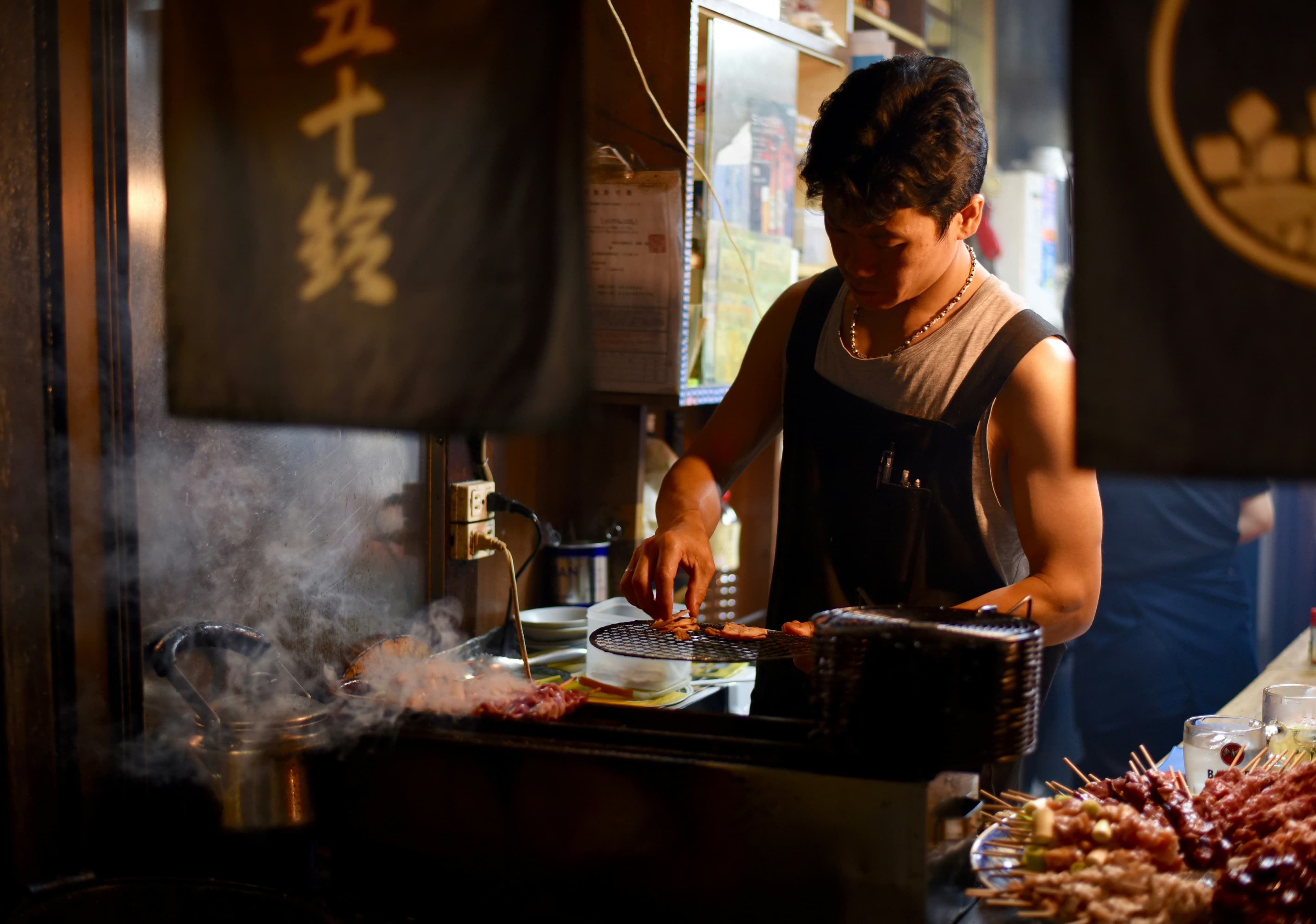
Indonesia is one of the world's three largest coconut producers, and the country's premium shells do not come from a single region. They come from a corridor of equatorial islands — North Sulawesi, Maluku, Lampung, coastal Kalimantan — where mature plantations, volcanic and alluvial soils, and a long wet season grow the dense, oily, thick-walled shells that make export-grade charcoal possible.
We buy from four regions, chosen for shell density, supply consistency, and the collectors we have come to trust there. North Sulawesi — the Minahasa highlands and Bolaang Mongondow — gives us the densest, oiliest shells we work with; the soil is young and volcanic, the trees are mature, and the wall thickness at the equator of the shell is reliably above our threshold. Maluku contributes smaller volumes of similar quality from its inner islands. Lampung, in southern Sumatra, is our most consistent supply at slightly lower density. Coastal East Kalimantan rounds out the calendar when island freight is interrupted by weather.
A coconut grown on a salt-soaked atoll, or on the dry edge of an island in the east, gives a thinner, lighter shell with less fixed carbon to work with. The species is the same; the latitude, the soil, and the rainfall are not. The geography is part of the specification.
We buy from collectors who buy from smallholders. We do not own plantations and we are not in a hurry to. The groves were here before the company and will be here after it. Our job is to choose well from what they produce — region by region, season by season — and to pay properly for the lots we accept. We have walked the warehouses we buy from.
How we select
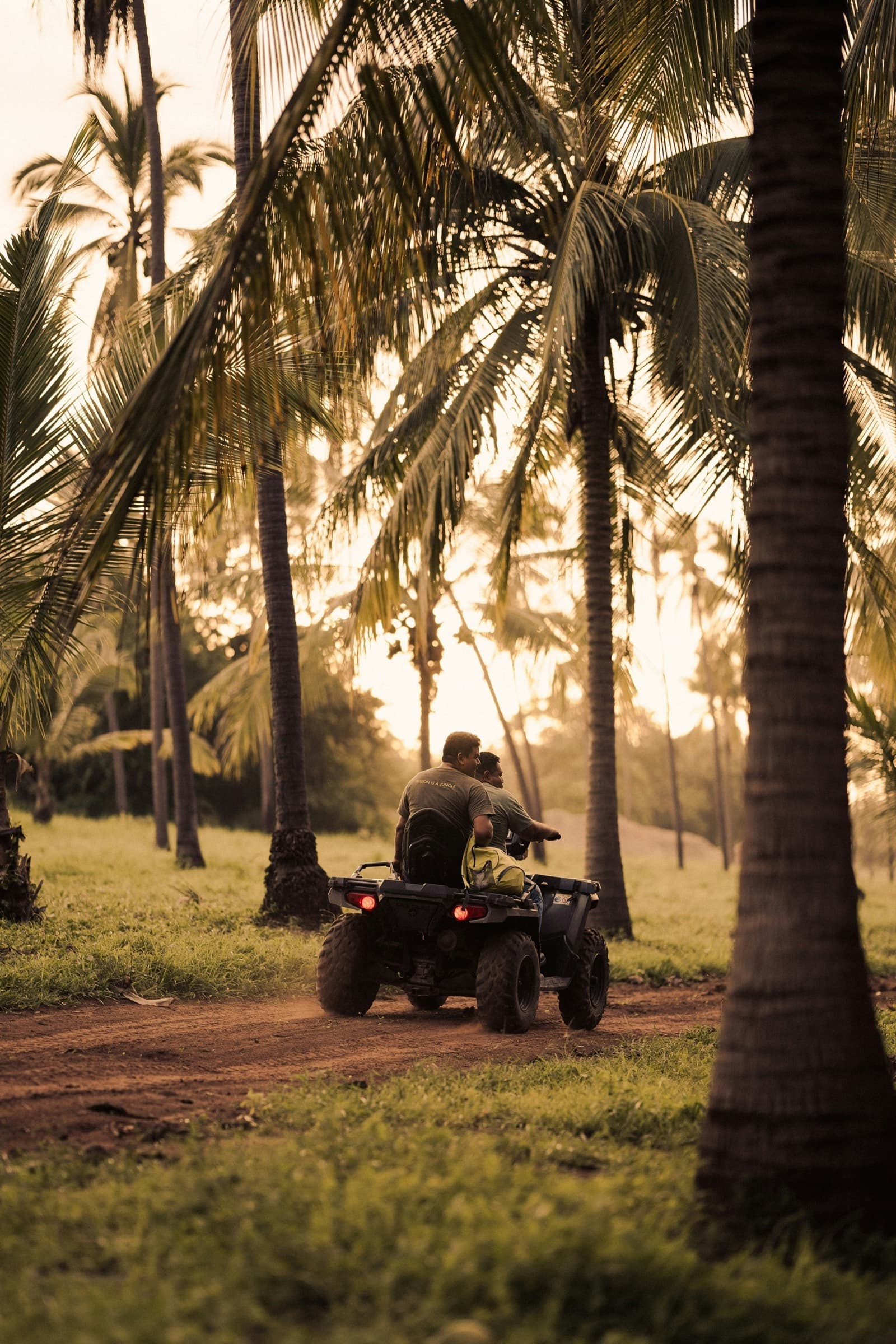
Every lot of raw shell is inspected before it enters the workshop in Pati. We accept a lot, or we send it back. We do not blend regions to lift an average.
- Moisture
- Below 12% on arrival at the workshop
- Wall thickness
- Minimum 3 mm at the equator of the shell
- Age
- Mature shells only — no green, no immature
- Contamination
- No visible mould, no salt residue, no oil
- Origin
- Traceable to a named region — North Sulawesi, Maluku, Lampung, or coastal Kalimantan
- Source preparation
- De-husked and sun-dried at source within ten days of harvest
A lot is approved by the workshop lead and one second pair of eyes. The decision is written down, with the date, the collector, and the weight. If we reject, we say why. The collectors we have worked with longest know our criteria as well as we do; rejections are rare, and that is the relationship we are trying to build.
Future materials
Coconut shell is the chapter we are in. Others will follow, one at a time, after this one is unmistakable. We do not announce materials we cannot yet ship.